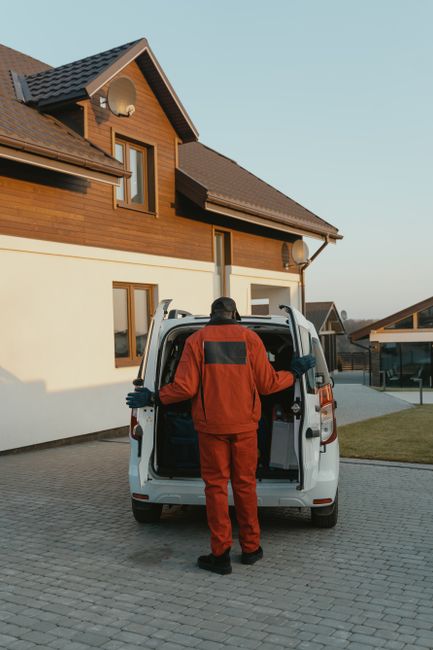
Belmont Village man and van solutions for tight driveway jobs
If you've ever stared at a narrow driveway, a low wall, a tight turn, and a van that looks just a bit too big for comfort, you'll know the feeling. That awkward pause before a move can be the difference between a smooth day and one full of reversing, dragging, and mild panic. Belmont Village man and van solutions for tight driveway jobs are designed for exactly that kind of situation: homes where access is limited, parking is tricky, and a standard removal setup would be clumsy at best.
In this guide, we'll break down how these moves work, what makes them safer and faster, and how to prepare your property so the van, crew, and furniture all move without drama. We'll also cover common mistakes, practical checklists, and the sort of real-world details that matter when every inch counts.
Expert summary: tight-driveway moves are rarely about brute force. They're about planning, the right vehicle size, careful loading, and sensible access decisions. Get those right and the whole job becomes much less stressful.
Contents
- Why Belmont Village man and van solutions for tight driveway jobs Matters
- How Belmont Village man and van solutions for tight driveway jobs Works
- Key Benefits and Practical Advantages
- Who This Is For and When It Makes Sense
- Step-by-Step Guidance
- Expert Tips for Better Results
- Common Mistakes to Avoid
- Tools, Resources and Recommendations
- Law, Compliance, Standards, or Best Practice
- Options, Methods, or Comparison Table
- Case Study or Real-World Example
- Practical Checklist
- Conclusion
- Frequently Asked Questions
Why Belmont Village man and van solutions for tight driveway jobs Matters
Tight driveway moves are a different animal from a straightforward kerbside collection. There may be a steep slope, a short run-up, a shared access lane, parked cars on both sides, or a gate that opens inward and steals precious space. Sometimes it's not even the driveway itself; it's the combination of a difficult approach, a busy road, and furniture that has to come out of the property in one careful sequence.
That's why a tailored man and van service matters. It gives you the flexibility to work with a smaller, more manoeuvrable vehicle and a crew that knows how to load and unload in tight conditions. In practical terms, it often means less time reversing, fewer risks to walls and vehicles, and fewer headaches for you and your neighbours. Let's face it, nobody wants a van blocking half the street while someone else is trying to leave for work.
In Belmont Village, access can be the real challenge, not the distance. A job may only be a short move across town, but a poor driveway layout can make it feel ten times harder. The right approach keeps the move controlled and avoids the sort of half-done, stop-start process that leaves everyone tired by lunchtime.
If you're comparing services, it helps to look beyond the vehicle itself. You want a provider with sensible planning, clear expectations, and the ability to adapt. That is where a proper man and van service becomes more than transport; it becomes a moving solution.
How Belmont Village man and van solutions for tight driveway jobs Works
The process usually starts with access, not boxes. A good mover will want to know what the driveway looks like, how steep it is, whether there's turning space, and whether parking needs to be done on the road. Sometimes a quick photo is enough. Sometimes a short video is better. A few extra details at the start can save a lot of shuffling later.
From there, the team decides how to position the van. On a tricky driveway, that might mean reversing in only if the angle is safe and the ground is suitable. Or it may mean parking short and using trolleys or manual carries for the final stretch. No heroics. Just sensible work.
Loading matters just as much. Heavy items should be secured early, fragile pieces padded properly, and long items like wardrobes or tables laid out in the order they'll come off. When the driveway is tight, every trip counts. A good layout inside the van reduces back-and-forth and keeps the job moving.
In many cases, the service fits neatly into a wider move plan. If you're moving a whole home, a route can be built around home moves or broader removal services. For single bulky items, a focused collection can be arranged through furniture pick-up. Different job, same principle: handle access properly and the rest becomes simpler.
One thing worth saying: tight driveway work is often slower, but that doesn't mean it's inefficient. A careful move can actually be faster overall than a rushed one. Strange, but true.
Key Benefits and Practical Advantages
The biggest advantage is obvious: a compact, well-managed vehicle can reach places a larger lorry simply shouldn't. But there's more to it than fitting through the gap.
- Less risk of property damage: narrow walls, low fences, and corners stay safer when the vehicle is chosen with access in mind.
- Better control on awkward surfaces: short driveways, gravel, wet paving, and inclines need a lighter touch.
- Faster handling of small to medium moves: you avoid overcommitting to a huge truck that creates more problems than it solves.
- More flexibility: man and van crews can usually adapt to a short walk, staggered loading, or split access.
- Lower stress for residents and neighbours: less obstruction, less noise, less standing around wondering what's next.
There's also a commercial benefit if you're a small business or independent trader. Tight access isn't just a domestic issue. Office equipment, archive boxes, retail stock, and display items can all need careful handling. If that sounds familiar, a service like commercial moves or even office removals can be the right fit when access is awkward but the workload is still modest.
Key takeaway: the best solution is usually not the biggest vehicle, but the one that can work cleanly with your driveway and your furniture.
Who This Is For and When It Makes Sense
This kind of service suits a lot of people, and not all of them are doing a full house move. In fact, many are just dealing with one or two annoyingly large items or a home where parking is never straightforward.
It makes sense if you are:
- moving from a terraced property with limited frontage
- living on a narrow street where parking is already tight
- dealing with a steep, short, or curved driveway
- moving bulky furniture that can't be manoeuvred easily by hand
- relocating from a property with low walls, gate posts, or tight side access
- trying to avoid a larger removal vehicle that would block access entirely
- planning a last-minute move and need something practical, not overcomplicated
It can also suit customers who want a middle ground between a self-managed move and a full-scale removal crew. If you're thinking, "I don't need a massive operation, but I do need help," that's usually a good sign you're in the right place.
For people who want hands-on support with packing, lifting, or load organisation, services such as packing and unpacking services can also remove a lot of friction. And if you're trying to compare providers, the wider category pages like removal company and removal companies can help you understand how different moving setups are positioned.
Step-by-Step Guidance
If you want a smooth tight-driveway move, planning is everything. Here's a simple process that works in practice.
- Measure the access. Check driveway width, gate width, slope, surface condition, and the turning area near the road. If the gap looks borderline, measure it. Guessing is how people end up with a van parked at an angle and a very sad-looking sofa.
- Photograph the route. Take clear photos from the road to the property, the driveway entrance, and any tight bends or obstructions. If there's a low branch, a bin store, or a tricky overhang, include that too.
- List the big items. Name the awkward pieces first: wardrobes, beds, washing machines, glass tables, large desks. These items affect loading order and vehicle choice.
- Clarify parking. Decide whether the van can go on the drive, must stay on the road, or should use a nearby safe stopping point. If you're in a controlled parking area, think about permissions or timing.
- Prepare the property. Clear loose items, move plant pots, open gates fully, and protect any vulnerable edges or walls if needed.
- Set the loading plan. Put essentials together, keep fragile items separate, and make sure the largest pieces are ready first. This saves time once the van arrives.
- Walk the route with the crew. On arrival, a quick walkthrough helps everyone understand the safest path. It sounds basic, but it really does avoid surprises.
- Load and check. Make sure items are secured, straps are used where needed, and nothing can shift during transit.
If you want a more flexible vehicle type for this kind of access, a moving van or removal van is often the practical choice. For heavier or larger loads, some jobs may edge towards a broader movers setup, though the access still has to be the deciding factor.
Expert Tips for Better Results
Here's the part people tend to overlook: the driveway is not just a place to park, it's part of the move route. Treat it that way and you'll make better decisions.
1. Keep the entry point clear. A single wheelie bin, a flower pot, or a parked car can completely change the turning line. It sounds obvious, but it gets missed all the time.
2. Protect the pinch points. If the driveway narrows near a wall or gate post, place temporary protection where needed. Good crews are careful with this, especially when moving sofas or white goods.
3. Use the shortest safe carrying route. Long carries are tiring, slow, and riskier when items are awkward. Shorter is not always better for the van, but it is often better for the furniture.
4. Move the hardest item first if access is uncertain. If a wardrobe can fit, then the rest will usually be manageable. If it can't, you want to know early, not after the van is half packed.
5. Choose the right time of day. Morning jobs can sometimes be easier for parking. Busy school-run times, to be fair, are rarely the moment you want to be trying a tight reverse.
6. Keep communication simple. A quick text about the gate, the bell, or the best place to stop is often more useful than a long explanation. In practice, clarity beats detail overload.
Common Mistakes to Avoid
Most problems on tight driveway jobs are preventable. They're not dramatic failures, just small oversights that stack up.
- Booking a vehicle that is too large. Bigger is not better if it cannot get close safely.
- Not checking the slope. A steep driveway changes braking, loading, and footing.
- Forgetting about gate swing. An inward-opening gate can shrink usable space far more than you expect.
- Leaving cars in the way. Even one parked vehicle can destroy the turning plan.
- Assuming everything can be carried by hand. Heavy appliances and large furniture need proper handling.
- Underestimating loading time. Tight spaces slow the process, so build that into your schedule.
- Failing to mention access issues in advance. This is the big one. Surprises on moving day rarely age well.
Another subtle mistake is treating the driveway like an afterthought. It's not. If access is the limiting factor, it becomes part of the service design. Simple as that.
Tools, Resources and Recommendations
You do not need specialist equipment for every move, but the right basics help a lot.
- Measuring tape: useful for checking vehicle clearance, gate width, and awkward furniture dimensions.
- Phone camera: take photos of the access route, especially if the driveway has a curve or poor visibility.
- Furniture blankets and straps: important for keeping items stable and reducing scuffs.
- Trolley or sack truck: ideal when the driveway is short but too awkward for repeated heavy carries.
- Gloves and sensible footwear: especially on wet paving or gravel. One slippery step and the whole day feels different.
If your move includes specialist handling or careful planning around access, the broader removal van and man with van options may help you compare service style and vehicle format. If you are still weighing up the scale of the job, removals and removals near me are useful starting points when you want a general overview before booking.
For homeowners wanting to understand the difference between a simple vehicle hire and a supported move, the page on man with a van is also a sensible read. It helps clarify what sort of help is included, which matters more than people think.
Law, Compliance, Standards, or Best Practice
For tight driveway jobs, the main compliance concerns are practical rather than complicated. You want a move that respects property access, road safety, and ordinary duty of care. In the UK, that usually means the mover should work safely, avoid blocking emergency access, and handle lifting and loading in a way that reduces risk to people and property.
If a van has to stop on the road, it should do so safely and legally. If there are parking restrictions, those need to be considered before the move starts. If a driveway surface is fragile, slippery, or steep, the loading approach may need to change. These are all normal professional judgement calls, not red tape for the sake of it.
Insurance is another important point. You want to know that the mover has suitable cover and understands the limits of that cover. It's also worth checking the provider's own approach to safety and handling. Belmont Village customers often care about this for good reason: in a tight access job, a small error can have an expensive consequence.
For added reassurance, it helps if the company publishes clear information about standards and handling. Pages such as insurance and safety, health and safety policy, and terms and conditions are worth reviewing before you book. They won't solve a difficult driveway, of course, but they do tell you how seriously the business treats risk and expectations.
Options, Methods, or Comparison Table
Choosing the right moving method depends on the access, the volume, and how much help you want on the day. Here's a simple comparison to make the decision easier.
| Option | Best for | Strengths | Limits |
|---|---|---|---|
| Small man and van | Tight driveways, smaller loads, flexible access | Manoeuvrable, practical, usually quicker to position | May require more trips for larger loads |
| Removal van | Medium moves with awkward access | Good balance of capacity and flexibility | Still needs careful route planning |
| Full removal truck | Big properties with easy access | More volume in one run | Often unsuitable for narrow drives or short turning space |
| Self-move with hire vehicle | Very small jobs where you have time and help | Can be economical for simple loads | Stressful on tight access, and a bit unforgiving if you misjudge the size |
Truth be told, the "best" option is the one that fits the property without turning the driveway into a bottleneck. If the access is extremely tight, a smaller vehicle with a careful loading plan will usually beat a larger one every time.
Case Study or Real-World Example
Here's a realistic example. A customer is moving from a home with a short driveway that slopes down from the pavement and bends slightly near the garage wall. There's room for a car, but not much else. A standard large van would have needed several awkward turns and probably a second person guiding from the edge of the drive. Not ideal.
Instead, the job is handled with a compact vehicle and a simple plan. The biggest items are loaded first: a bed frame, a mattress, two wardrobes, and a washing machine. The crew parks so the rear doors are close to the property entrance, then uses short carries and careful positioning to avoid clipping the wall. The gate stays open while the path is clear, and the lighter boxes are stacked in a logical order so they can come off in sequence at the destination.
The move is not flashy. No drama, no shouting, no frantic shuffling. Just controlled work, a few sensible pauses, and a driveway that survives the day in one piece. That's the real win. By late afternoon, everything is done, and the customer hasn't had to play traffic marshal or furniture whisperer all day.
If the same move had been forced into a bigger vehicle, it would probably have taken longer and felt much more stressful. Smaller, smarter, calmer. Sometimes that's the whole job.
Practical Checklist
Use this checklist before your move day. It's simple, but it covers the things that usually trip people up.
- Measure driveway width, gate width, and any tight bends
- Check whether the surface is steep, wet, uneven, or fragile
- Take photos of the access route from the road
- List all large or awkward items separately
- Confirm whether the van can enter the driveway or must stop outside
- Move cars, bins, and obstacles in advance
- Tell the mover about low branches, steps, or overhead obstructions
- Keep packing materials, keys, and essential documents accessible
- Protect vulnerable walls, corners, or flooring if needed
- Allow extra time, because tight access almost always slows the first few minutes
If you're still unsure how to classify the job, compare it with a standard house removals setup or a more tailored man and van removals arrangement. The difference is usually access, scale, and how much hands-on support you want.
Conclusion
Belmont Village man and van solutions for tight driveway jobs are all about making a difficult access point feel manageable. The right vehicle, the right load order, and the right planning turn a cramped driveway from a problem into a workable part of the move. That's the real skill here.
Whether you're shifting one bulky item or handling a small home move, the details matter. Measure first, communicate clearly, and choose a service that respects the access rather than fighting it. Do that, and the whole day tends to settle down. A little. Which is nice.
Get a free quote today and see how much you can save.
For a service conversation that balances access, safety, and practical moving support, you can also review the company background via about us and use the contact us page when you're ready to discuss your driveway and move details.
Sometimes the smallest access spaces need the most thoughtful approach. That's fine. With the right plan, even a tight driveway can become just another part of a job well done.
Frequently Asked Questions
What makes a tight driveway move different from a normal man and van job?
The main difference is access. A normal job often assumes the van can park close, turn easily, and load without obstacles. A tight driveway job needs more planning around angles, turning space, and safe carrying routes. That means the vehicle choice and loading sequence matter much more.
Can a man and van service handle a very narrow driveway?
Yes, if the vehicle size and access are assessed properly beforehand. In some cases the van can go on the drive; in others it should stop on the road and the team carries items the final distance. The key is not forcing a vehicle into a space it does not suit.
Should I measure my driveway before booking?
Absolutely. Even rough measurements help. Width, slope, gate clearance, and turning space can all affect the move. A few photos are useful too, especially if the driveway bends or the approach is awkward.
What if the van cannot reverse into my driveway safely?
Then it shouldn't. A good moving team will adapt by parking in a safer position and using manual carries or trolleys if appropriate. Safety and control are more important than getting the vehicle into the exact spot you imagined.
Is a smaller van always better for tight driveway jobs?
Not always, but it is often the best starting point. You still need enough capacity for the load. The sweet spot is usually a van that is compact enough to handle the access but large enough to keep the move efficient.
How do I prepare a driveway move in bad weather?
Clear the route, remove slippery debris where possible, and make sure the path is as safe as it can be. Wet paving and steep slopes can be tricky, so allow a little more time. It's one of those jobs where a cautious pace pays off.
Do I need to be present on moving day?
Usually, yes, at least at the start and end, so access can be explained and the key items can be confirmed. If you cannot be there for every stage, make sure the mover has clear instructions and a way to reach you quickly. That avoids confusion later.
Can this service be used for office or business moves too?
Definitely. Tight access is not just a home issue. Small offices, studios, and retail spaces can all have awkward driveways or loading areas. In those cases, services like office relocation services can be a better fit than a one-size-fits-all approach.
What should I tell the mover before booking?
Tell them about driveway size, slope, gate width, parking restrictions, any steps, and your largest items. If the route includes a narrow lane or shared access, mention that too. The more precise the picture, the better the plan.
Are tight driveway jobs usually more expensive?
They can be, but not always. Sometimes the extra time and care are absorbed into the job. If access adds significant loading time or requires special handling, the price may reflect that. The sensible move is to ask for a clear quote after explaining the access conditions.
What is the safest way to move heavy furniture out of a cramped driveway?
Use a route that avoids sharp turns, keep hands clear of pinch points, and make sure the item is carried by enough people for its size. If possible, use blankets, straps, or a trolley. Heavy furniture is where a calm, methodical approach really pays off.
Where can I check service details before I book?
It helps to review pages such as pricing and quotes, payment and security, and insurance and safety. Those pages give you a clearer picture of what to expect before the moving day arrives.